
Operation Absolute Resolve marks a pivotal turning point for the Western Hemisphere. The US capture of Nicolás Maduro and his wife on a Venezuelan army base and their extradition to face drug trafficking charges is a US triumph over a failed socialist usurper of power. The Chavista regime has for more than a decade plagued the region with political polarization, instability, drug trafficking, corruption, a malign Iranian presence, and humanitarian despair.
The bold operation demonstrated a singularly US level of military competence and prowess. Authoritarian socialist regimes have received a clear warning that the machinations of the São Paulo Forum will not be tolerated in the Western Hemisphere. The retreat of expansionist socialism in the region will benefit millions in the Hemisphere, from the Arctic Circle, across the Gulf of America, to Tierra del Fuego.
Maduro’s reign was nothing short of catastrophic. Venezuela descended into world-topping inflation, widespread hunger, and a mass exodus of nearly 8 million refugees since 2014. According to World Bank data, Venezuela was once among Latin America’s wealthiest nations. In 1960, it had a higher real GDP per capita than the region (by 22 percent), the world (by 11 percent), and even textbook economic successes such as Chile and Singapore.

By 2024, Venezuela’s real GDP per capita was more than 80 percent under both the regional and world averages. Since 2013, when Maduro took power, Venezuela’s GDP and GDP per capita have fallen by 68 percent in constant terms. The per capita decline is exceptionally disastrous, given the enormous Venezuelan population exodus.
Maduro’s regime rigged the 2024 elections and its military facilitated a narcoterrorist hub through the “Cartel of the Suns.” It has trafficked largely in cocaine sent to Europe and also the United States. His alliances with authoritarian powers like Russia, China, and Iran further entrenched a web of global threats to US and regional security.
With Maduro gone, Venezuela can hopefully begin a phased transition away from the socialist regime. This will involve cautious continuity to provide (1) some measure of stabilization and avoid sociopolitical chaos, (2) recovery through infrastructure rebuilding, and (3) a transition to free and fair elections resulting in a democratic handover.
Early signs are moderately encouraging, especially with the release of political prisoners. This is not an occupation; it is a temporary bridge to self-governance, potentially involving opposition figures like María Corina Machado.
For Venezuelans, it means access to the world’s largest oil reserves now redirected from funding repression to fueling prosperity. With an estimated 303 billion barrels coming available, global oil supplies could surge by 1–1.5 million barrels per day. That could in turn slash prices below US$50 per barrel and alleviate energy costs for families throughout the Western Hemisphere.
The positive implications extend far beyond Venezuela’s borders, revitalizing Latin America. Maduro’s ouster weakens the leftist axis that has stifled progress in countries like Cuba, Nicaragua, and Bolivia. Cuba, long reliant on subsidized Venezuelan oil, faces an energy crunch that could accelerate its own democratic reforms, ending decades of isolation and opening doors to US investment.
In Mexico and Colombia, reduced narcotrafficking networks will curb cartel violence, saving lives and boosting cross-border trade. Argentina and Chile, already aligned against socialism, stand to gain from regional stability, fostering investor confidence and economic integration.
The Western Hemisphere has long suffered from Maduro’s export of instability: refugee flows straining US borders, organized crime syndicates infiltrating Central America, and ideological divisions fracturing organizations like the Organization of American States. By severing these ties, President Donald Trump’s strategy promotes a unified front against external meddling in Hemispheric affairs.
Russia loses a key ally for evading sanctions, while China’s Belt and Road loans—worth $100 billion in Venezuela—face disruption, curbing Beijing’s influence in the Americas. This realignment strengthens democratic norms, as seen in supportive stances from Argentina and Chile.
North of the equator, Canada may be significantly impacted. As a major oil exporter, Canada might face short-term competition from Venezuelan heavy crude, potentially trimming export values. However, lower global prices will reduce energy costs for Canadian consumers and industries, stimulating growth in the years going forward. This will make the United States a far more important economic partner, despite Canada’s ill-conceived outreach to Beijing.
For the United States, the wins are direct: enhanced energy security, fewer migrants at the southern border, and a victory in the war on drugs.
Growing public approval underscores this optimism, especially among the Republican base, widely seen as opposed to regime-change operations in general. Critics decry risks of instability or imperialism, but these are mitigated by the phased approach and legal precedents like the 1989 US intervention in Panama. Operation Absolute Resolve also brings into perspective the US initiatives to purchase Greenland, a US aspiration with a long history. Native Greenlanders are ethnically Inuit, just like Alaska, but Greenland is even farther north. US control of this territory would guarantee Arctic security on a much greater scale than Denmark or the whole of Europe would be willing to offer.
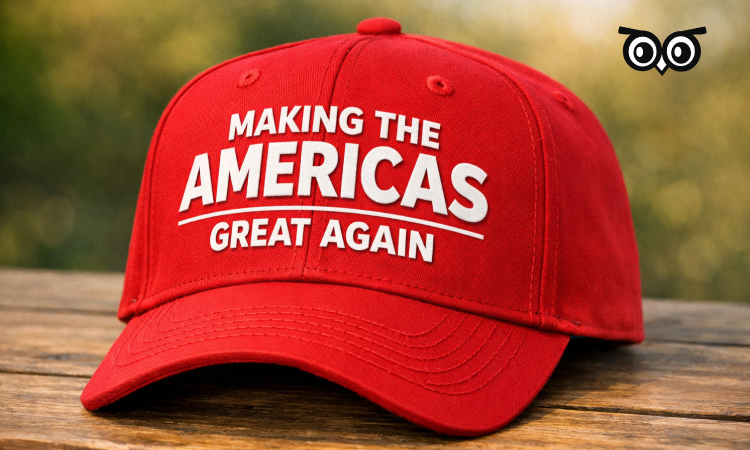
Ultimately, Maduro’s removal is a beacon for the Western Hemisphere, promising reduced crime, economic recovery, and a return to shared values and greater prosperity in the region. Governments in the region best align themselves, lest they be excluded from the promise of the future. As Trump himself might say, it is about making the Americas great again.


