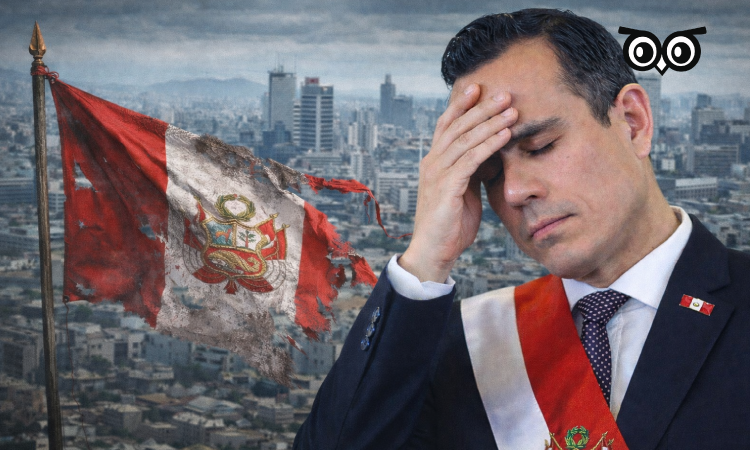
On February 19, 2026, left-wing Congressman José María Balcázar took office as the interim Peruvian president, replacing José Jeri, who held office for just 130 days. Since 2016, no Peruvian president has completed a full term, and eight individuals have assumed the presidency. While two of them resigned under political pressure, Congress impeached four amid escalating institutional clashes and corruption scandals.
Rather than function as an effective system of checks and balances, Peru’s legislative branch has managed to amass power. During the current legislative tenure, Congress has enacted laws affecting criminal liability, prosecutorial autonomy, and enforcement capacity.
Presidential instability and corruption scandals have captured media attention and public outrage. In the meantime, with little scrutiny, legal changes have enabled the expansion of criminal networks across Peruvian territory.
A 2025 Human Rights Watch report found that Congress weakened judicial independence and limited prosecutors’ capacity to pursue cases linked to illicit economies. The study analyzed 88 laws enacted since 2022. Some of these legal changes have also shielded public officials accused of cooperating with criminal actors.
Will Freeman, a fellow for Latin America Studies at the Council on Foreign Relations, argues that the economic elite and illicit networks have penetrated political institutions particularly through campaign financing. As a consequence, reforms have weakened law enforcement capacity in sectors such as corruption, illegal mining and logging, and drug trafficking.

The implications of these enforcement gaps are particularly significant in the extractive sector. In 2024, Peru exported approximately US$15.5 billion in gold. Around 40 percent of that output originated from illegal sources. Illegal gold mining has become the country’s most lucrative illicit economy. It has generated roughly 60 percent of the total assets laundered between 2014 and 2025, according to Peru’s Financial Intelligence Unit.
In June 2024, business associations warned about the risks posed by the amendments to the Penal Code excluding 59 of the 91 originally covered criminal offenses. They argued reforms would increase Peruvians’ exposure to extortion, robbery, and kidnapping by weakening legal tools used to prosecute organized criminal activity.
The cumulative effects of diminished enforcement capacity are increasingly visible. Peru closed 2025 with a homicide rate of 10.7 per 100,000 inhabitants—up from 10.1 in 2024 and 9.3 in 2023. The country also recorded 25,196 extortion cases as of December 27, a 20 percent increase compared to the previous year.
According to César Ortiz, president of the citizen security organization Aprosec, part of this surge is linked to the consolidation of transnational criminal organizations such as Tren de Aragua. TdA has introduced territorially structured operations in extortion, contract killings, and coordinated kidnappings. These modalities were previously uncommon in Peru.
As legal exposure decreases and prosecutorial tools are narrowed, organized criminal networks face fewer institutional constraints on expansion. As Peruvians head to the general election on April 12, 2026, public attention will once again center on presidential candidates. However, the past decade suggests that organized crime has gained ground not in spite of political instability, but in the institutional space created by it.
Within Peru’s current structure, Congress retains the authority not only to remove presidents, but also to define the legislative gaps through which criminal markets can operate. The composition of the next legislature will therefore shape whether recent enforcement gaps persist, or whether the state’s capacity to confront organized crime can be restored.