
Fergus Hodgson is the author of Financial Sovereignty for Canadians (2024).
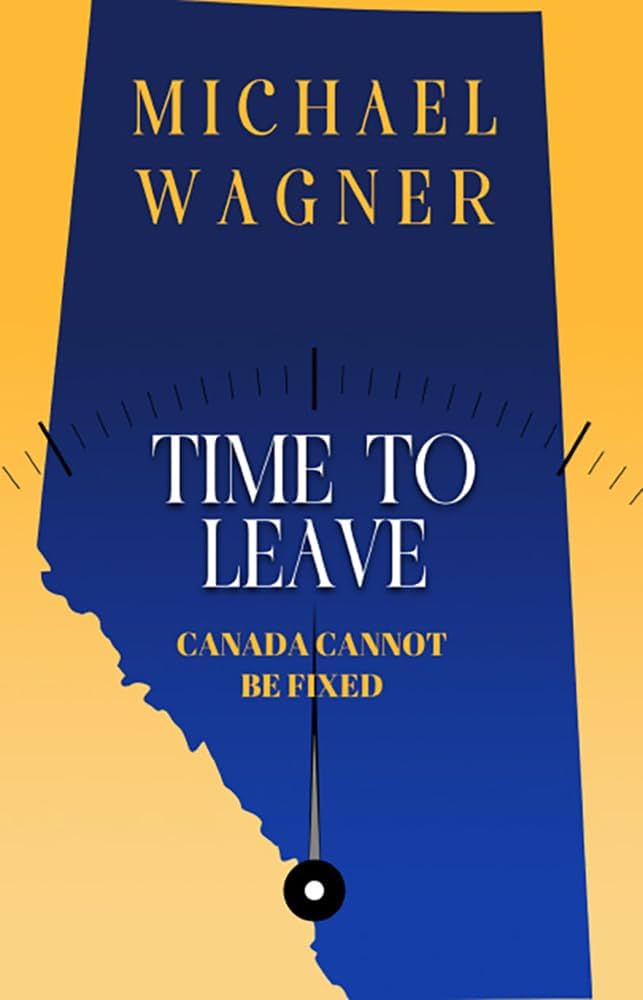
The new US president has done more for provincial separatism than any Albertan or Quebecker in recent years. His tariffs and the retaliatory escalation have revealed an incompetent and disconnected Ottawa political class, but that scratches the surface of the confederation’s precariousness. As Michael Wagner notes in Time to Leave (2024), “Canada cannot be fixed.”
Jokes in jest about Gay North Dakota and Governor Justin Trudeau evoke saltiness because the incumbents sense their obsolescence, vulnerability, illegitimacy, and fading power. They purport to govern 10 provinces and three territories, but their poor performance relative to the United States is ever more glaring by the day.
Not only is the Great White North falling behind in economic terms, she has festering domestic divisions that can no longer be swept under the rug. Three alternatives to the Canadian confederation are more attractive, and all three will likely play out in the next decade or so. “Postnational” Canada, as Prime Minister Trudeau has described her, is held together by little more than status quo bias.
An array of nontraditional media—such as Blacklock’s Reporter, Rebel News, and the Western Standard—and forward-thinking public intellectuals—such as Jodi Bruhn, Barry Cooper, and Marco Navarro-Génie—have been raising awareness of the challenges and alternatives. An assertive and disruptive Donald Trump has brought their insights to the forefront, hand in hand with an army of citizen journalists. Meanwhile, confidence in taxpayer-funded, regime-defending media, such as the CBC, continues to dwindle.
Navarro-Génie founded the Haultain Research Institute to find “solutions to the structural inequities detrimental to landlocked Canadian provinces.” Canada “remains trapped in a postnational fantasy. Trudeau’s insistence that Canada has no ‘core identity’ has given him carte blanche to overload the country with unsustainable immigration levels, impose authoritarian policies, and ignore economic realities.”

Navarro-Génie would be the first to admit the problems run deeper than one politician. So what are the paths out of confederation?
1. US statehood is a better deal.
Canadians now speak openly about the superiority of the US Constitution versus the Canadian Charter of Rights and Freedoms. The latter, finalized in 1982, authorizes affirmative action and has no right to property—forget the right to bear arms—since the socialist New Democratic Party did not want property included. Then Prime Minister Pierre Trudeau, Justin’s father, was happy to oblige. Aside from the freedom not to be offended, one would be hard pressed to identify rights and freedoms the Charter has protected.
Canada does not even have interprovincial free trade; a 2017 agreement failed to resolve this long-standing impediment to competitiveness. In November, Steven Globerman of the Fraser Institute stated: “No matter who wins the US presidential election, Canada should prioritize freer interprovincial trade and labour mobility.”
Previously sacrilege, joining the United States has entered the Overton window, and why not? Does anyone believe the Prairie or Atlantic provinces, for example, are fortunate to be in Canada rather than the United States?
Statehood, or territory status, is not my preferred path forward, since it would replace one faraway and indebted ruler with another. However, it would receive US military support during the transition.
Half of young Canadian men, as surveyed in January, say they would accept US citizenship. That survey showed conservatives and high-income earners are more inclined to make the United States their home. Without substantive change, Canada’s best and brightest will empty out.
Edmonton-born psychologist Jordan Peterson, a notable émigré, has called on Canada to offer Alberta a better deal. Good luck beating “full access to [US] markets … lower costs on almost all manufactured goods and on food; lower taxes, both corporate and personal … genuine admiration for [Alberta’s] economic and industrial endeavours, along with a can-do, visionary, and deeply entrepreneurial culture; immediate, reliable, and guaranteed access to ports and pipelines, and full military defence. And, if that’s not enough, dear lady—no transfer payments!”
Ottawa’s progressive, redistributive policies threaten “both Canada’s economic viability and the likelihood it will survive as a nation.… [They fuel] our rapid descent toward comparative poverty and irrelevance.… If we had a well-constituted country, [Trump’s offer of statehood] would have never happened, or the suggestions would have been laughable. I see damn few people laughing, however … It’s high time for the Albertans to play hardball.”
2. Alberta independence is inevitable.
The Laurentian Canadian political class of Ontario and Quebec have been suffocating the Albertan economy, plundering its energy sector, and laughing all the way to the bank for generations. Federal programs redistribute 5 percent of the Albertan GDP to other provinces—a net contribution of $244.6 billion between 2007 and 2022 and a “structural injustice,” in the words of Cooper. Meanwhile, in the population centers clustered along the St. Lawrence River and Lake Ontario, there is a palpable scorn and lack of empathy for Alberta.
Laurentian Canada overshadows the Prairies in political patronage. Those enjoying this disproportionate power will never relinquish it for the likes of a directly elected Senate, akin to what the United States has. Cory Morgan, author of The Sovereigntist’s Handbook (2023), conveys the point succinctly: “Alberta is only considered a milk cow in the federation. To be drained and used as a tool for the rest of the country.” His book has plain-spoken advice for how to make secession a reality from bottom-up support.
The key to Alberta independence is awareness, which is unstoppable. It is rising swiftly on account of organizations such as the Alberta Prosperity Project and books such as No Other Option: Self-Determination for Alberta (2021) by Wagner. Only Quebec’s departure could perhaps avert Alberta’s departure, since Canada sans Quebec would ease the burden and shift political influence away from the Laurentian establishment. However, they have grown dependent on largess and will fight tooth and nail to resist change.
As more Albertans understand the exploitation and disinterest from Ottawa and appreciate their own distinctiveness, they will back sovereignty. Akin to their Montanan and Wyomingite neighbors, Albertans exhibit rugged individualism, which explains longtime classical-liberal Premier Danielle Smith, a maverick among her peers. Albertans’ preference for limited-government conservatism fits their distinct identity, and it aligned with the 2022 Freedom Convoy.
This “Get’er Done” identity—as detailed by Bruhn, who holds a University of Notre Dame doctorate in political science—has zero representation in Ottawa and does not fit in Canada. Maybe it did at one time, but that ship sailed more than a generation ago. The persecuted convoy truckers learned this the hard way, as Ottawa applied war powers to the protesters, froze their bank accounts, and blocked their fundraising.
Back in mid-December, prior to the trade war, 38 percent of Albertans believed their “province would be better off as its own country.” That is even higher than what the survey found in Quebec, which came excruciatingly close to independence in 1995 with 49.4 percent support. Premier Smith has the authority to call a referendum at any time she deems Albertans ready.
3. The end of Quebec’s privileges spells departure.
Quebec is an unabashed ethnostate that, particularly because of the French language, likewise does not belong in Canada. There are many efforts in place to cater to Quebeckers, who rightly see themselves as a distinct nation, and make Canadian membership appealing. These include national bilingualism, overrepresentation in the Canadian Parliament, and massive (rigged) payments via so-called equalization. In the 2025–2026 fiscal year alone, Quebec will receive CAN$13.6 billion for a population of 9 million.
A candidate seeking to succeed Trudeau as prime minister has just been dismissed by the Liberal Party because he does not speak French. One third of Canadians claim to speak French, but only those who speak both French and English fluently get a shot at leading the country. Half of Quebeckers describe themselves as bilingual, which gives them a tremendous advantage when seeking government employment.
This absurdity—akin to requiring nationwide English-Spanish bilingualism in the United States—struck me years ago on a short flight between Vancouver and Victoria in British Columbia. The flight attendants all spoke French and delivered announcements in French, while few if any passengers understood. More would have understood Chinese Mandarin or Cantonese.
Quebec’s representatives do their best to defend their constituents’ interests in Canada, as they should, but the gravy train is unsustainable. Without it, the impetus will be sufficient for Quebec’s secession.
First, Canada is becoming more multilingual, as the French-speaking population declines as a proportion. Preferential treatment for French is breeding hostility, and it makes less sense with time. Only a fifth of Canadians speak it at home, and they are densely concentrated in Quebec.
Second, Canada’s faltering economy, worsened by mutual tariffs, can ill afford subsidies for Quebec. The pain inflicted on Alberta to pay for these has become so great that they must end or Alberta will opt out. Either way, the carrot keeping Quebec will be gone.
What Next?
So much is in sway, predicting which of the above will come first is difficult. Amid the reorganization, there could be a regional alliance on the Prairies. The Atlantic provinces—New Brunswick, Newfoundland, Nova Scotia, and Prince Edward Island—could go their own way or opt for statehood and realize the Atlantica vision of closer ties to New England.
Structural change is coming, though, sooner rather than later. Western Hemisphere nations should ready themselves for positive relations and opportunities with new jurisdictions to the north. In addition, neighboring nations can recognize their new peers, aid peaceful transitions, and discourage any resistance or reprisal from Ottawa.
The ominous prospect of an unelected prime minister, to go with the unelected Senate, will underline Canada’s democratic deficit. Even if Conservative Party Leader Pierre Poilievre becomes the next prime minister, it will be from placating Ontario and Quebec. Attempts to reform Canada, without provinces opting out—à la Brexit—are a fool’s errand.

