
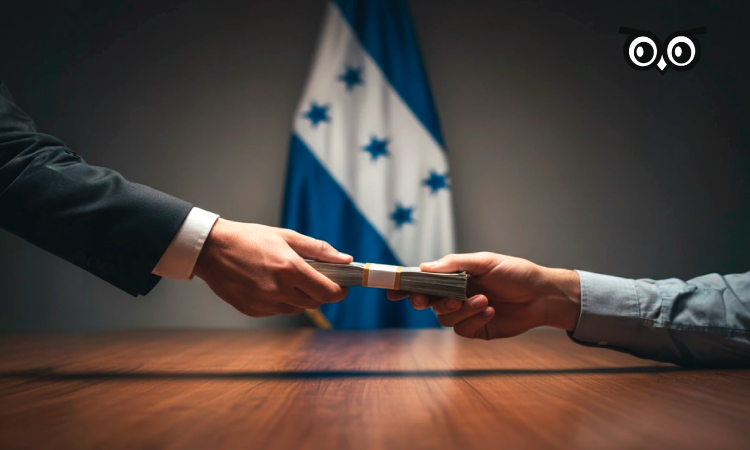
Honduras’s ruling-party legislator Isis Cuéllar has allegedly channeled 37 million lempiras (US$1.4 million) from the Social Development Agency (SEDESOL) to individuals with personal or political ties. Although the Libre party has expelled her, she continues to campaign in Copán.
In San Pedro Sula, another scandal entails potential conflicts of interest in municipal procurement. Vice Mayor Omar Menjívar alleges that firms most favored since 2022—via direct grants and private tenders—are linked to Mayor Roberto Contreras.
These cases (1) have surfaced during the electoral season; (2) involve officials who had anticorruption platforms; and (3) have been shielded with claims of political persecution.
The public receives disparate media coverage and agenda-driven narratives. These cases underline five factors that stymie anticorruption initiatives.

1) “Anticorruption” is a hollow campaign stance.
Voters hear anticorruption promises every cycle. However, elected officials rarely translate them into policy and enforcement.
Transparency International’s 2024 Corruption Perceptions Index ranked Honduras 154th out of 180 countries. According to 54 percent of respondents, corruption has increased in the past year; 28 percent reported paying a bribe in the past year.
On August 6, at the launch of Honduras First: A Promise that Must Be Fulfilled—led by the National Anti-Corruption Council (CNA)—four of the five presidential candidates pledged to fight corruption. The ruling party’s candidate, Rixi Moncada, neither attended nor signed the pledge.
CNA Executive Director Gabriela Castellanos emphasized: “Honduras loses over 77 billion lempiras annually to corruption … the pattern persists regardless of who governs.” The administration that succeeded Juan Orlando Hernández—now imprisoned in the United States on drug-trafficking charges—faces similar accusations. President Xiomara Castro’s brother-in-law and secretary of the National Congress, Carlos Zelaya, has been named in narco-related allegations.
2) Campaign funding is transactional.
Mayor Roberto Contreras says he neither knows municipal vendors nor needs to. He asserts he is the victim of persecution by former allies, among them Vice Mayor Menjívar. Contreras won the mayoralty as an independent but joined the Liberal party for reelection.
Liberal Party lawmaker Marlon Lara claims a politicized justice system is targeting opposition figures right before the election. He argues authorities are pursuing Contreras but ignoring cases like SEDESOL.
Contreras’s political trajectory illustrates how convenience-based alliances are fragile. These partnerships can devolve into back-stabbing amid changing political winds.
3) Corruption has been legalized.
CNA reports that many legislators route taxpayer funds through nonprofits and take a cut. Relabeling by the nonprofits conceals the money’s origins.
SEDESOL Minister Mirtha Gutiérrez reports that 40–50 legislators helped channel over 200 million lempiras in 2023–2024. Those legislators span the Christian Democratic, Liberal, Libre, National, and Salvador parties.
When corruption is cross-partisan, expecting the political class to self-police is naïve. Structural reforms must limit discretionary spending and raise the cost of malfeasance.
4) Paperwork has been conflated with transparency.
The outlet ICN uncovered the Cuéllar case through public-information requests to SEDESOL. By cross-checking beneficiaries against the program’s criteria, reporters found the identities failed to match requirements.
Monitoring procedures are not enough when almost no one reviews the documents. Instead of mandating more forms, Honduras should import private-sector due diligence practices: verify identities, audit bank trails, test eligibility, and flag anomalies in real time.
Municipal leaders like Contreras should also vet suppliers. That includes ownership checks and performance audits to deter fraud, low-quality works, and kickbacks.
5) International organizations are false gods.
Castro promised an internationally backed anticorruption commission. The proposal vanished, perhaps due to corrupto resistance to scrutiny.
Guatemala’s experience with the International Commission against Impunity (CICIG) showed that external bodies can rearrange power dynamics without addressing root causes. Honduras needs homegrown reforms, not a compliance façade.
Priority areas for Honduras are campaign financing, procurement, and social-funds delivery. One solution could be technology that notes red flags automatically: ownership registries, e-procurement with open data, randomized audits, and grievance dashboards.
Combating corruption requires political will. The political class do not benefit from rules that limit discretion, make cheating difficult, and hasten prosecution. Broad citizen movements must press for anticorruption mechanisms and enforcement after the election. Only when corruption carries a political cost will anticorruption initiatives go beyond rhetoric.

