
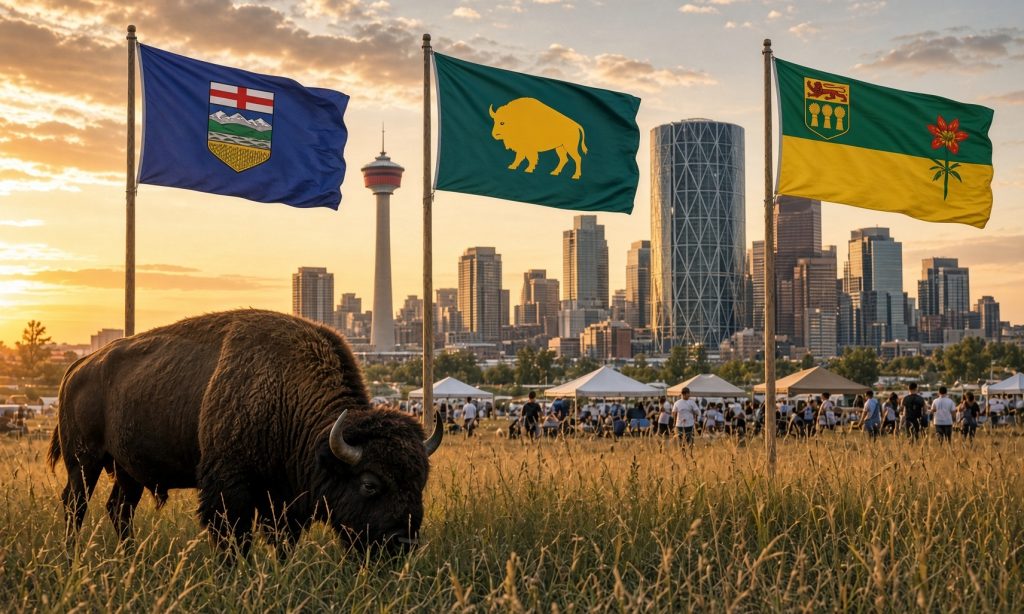
In line with polling projections, three-quarters of Alberta voters have rejected a path to nationhood. This likely has dimmed the optimism of some Alberta patriots, but it need not. The awareness generated was an immense step in the right direction, and we have a solid base of support to work with.
However, charging head first into another referendum would be insanity. That would burn even more precious political capital while failing to build the movement from the ground up.
Now is the time for cooler heads to prevail. That means taking a sober look at the outcome and brainstorming towards the noble goal of a Prairie nation-state. The question we face is how to best allocate our resources in a targeted, cost-effective fashion.
Whatever misgivings we have with the United Conservative Party, keeping a broad coalition together towards sovereignty remains crucial. Dividing our ranks would be shooting ourselves in the foot, since the New Democratic Party base are vehemently opposed to property rights and Western Civilization. The NDP will do everything in their power to expand their patronage network and bring in migrants deferential to them and Ottawa.
The same need for coalition building goes for the independence movement proper. Many people have sacrificed for this cause, and that merits respect not condemnation. In particular, I want to recognize Keith Wilson, Cory Morgan, Kathy Flett and Angela Tabak of Alberta Women for Independence, and Bruce Scholl of Unscrew the News as devoted people in this domain. We have an enviable army of dreamers and workers, and working with them is a privilege.
This morning, I shared a short post-referendum review with the Free Cities Foundation. This organization promotes decentralization via semiautonomous jurisdictions—free cities—and I recently joined them as an ambassador. Centralized and heavily layered federations such as Canada are poison for innovative and constituent-oriented governance, so FCF support is welcome here.
Cuban exile Mailyn Salabarría, representing FCF, was one of our star speakers at Capitalism & Morality, and she broadened the discussion. While an independent Alberta would not be a free city, it would be a step in the right direction and disruption to centralization.
My talk followed a line of questions, but the last one generated the most discussion. The invitation-only attendees were doers who wanted to see paths forward for jurisdictional renewal, competition, and decentralization. Here are the three I shared:
- Find First Nations with established sovereignty and work with their leaders to expand their self-governance. This could be a nod towards economic vitality, weaning themselves off federal transfers, and setting in motion healthy jurisdictional competition.
This is an area that needs substantial research and better understanding, since a lot of reserve governance remains cryptic to the outsider. The current paradigm is unsustainable, even if examining opens a can of worms. Federal spending on First Nation programs has quadrupled in the past decade to CAN$40.8 billion. My own mother was born on an Indian reserve in northeastern British Columbia, so I plan to visit there soon and better know the community.
- Build the entire movement from the ground up with what I call the Free Nation Project. Getting from 24 percent to 50 percent plus one will not happen overnight. Likely, it will require a generation—two or so decades. This seems like a tall order because it is. Status quo bias is real, as is nostalgia for a Canadian identity that exists largely in people’s imagination.
We will need people working in many capacities towards many new traditions and institutions, but I consolidate these activities into three categories: (1) demographics, (2) the vanguard, and (3) political strategy. With time, I will write more on how we can address these in a coherent, collaborative, and unstoppable manner. - Identify a small portion of Alberta for special economic status as a target for concentrated independence efforts. This area would be like a free city or town project within the Free Nation Project, and it could similarly be a catalyst for competition on the local level. Ideally, it would develop in a greenfield space, negotiate greater autonomy, and be a hub for accelerated free trade between Alberta and the United States.
My preference would be for this portion to be on the border with Montana and British Columbia or Saskatchewan. Natural beauty and amenable, community-oriented neighbors make the area between Cardston and Waterton the most likely candidate. The Cardston-Siksika electoral district backed all nine questions and almost cracked a majority on proceeding with a binding referendum. The Center for Local Autonomy, founded by a Saskatchewanian expat, would likely be a helpful partner in this endeavor.
This was one step in a lengthy journey. Let us learn, consolidate our gains, and proceed forward thoughtfully. In the meantime, as we collect our thoughts and recover, we can personally secede from Ottawa and assert self-governance at the individual and community levels. We can also show support to those who have sacrificed and done their best for what they believe to be a righteous cause.


