
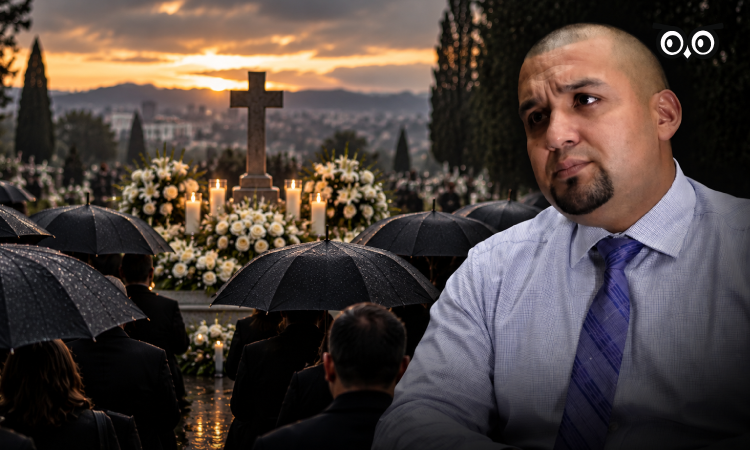
On the morning of October 17, 2026, Juan Francisco Solórzano Foppa was shot and killed while coaching his son’s soccer team at a sports complex in Guatemala City.
Foppa was a 43-year-old Guatemalan lawyer, former prosecutor, and former head of the Tax Administration Superintendency (SAT), the tax authority in Guatemala. Foppa came from a family scarred by the country’s civil war. He was the grandson of poet, feminist, and radical left-wing activist Alaíde Foppa—who was disappeared in 1980—and the son of a guerrilla fighter known as Comandante Camilo who was killed during the Marxist-inspired civil war.
That context matters. Foppa was killed in broad daylight on a weekend morning on a public-property complex surrounded by living quarters of the Guatemalan military. It was just a few blocks from an important Guatemalan military base. A second man, Gustavo Adolfo Aguilar Gamarro, died in the attack and has been described by authorities as a collateral victim.
As of the latest reports, investigators have not established a motive. President Bernardo Arévalo has directed his administration to coordinate with authorities so that both the material perpetrators and any who ordered the crime face the full weight of the law.
The assassination of Foppa is cause for worry for any person who cares about the political situation in Guatemala. In the days immediately before his death, his most recent line of public condemnation focused on the violent events in Huité, Zacapa, in late September 2026. Multiple people were killed, and unverified allegations abound that the Huité killings were done by the Guatemalan government, in coordination with the US government.
On October 15–16 or thereabouts, Foppa posted a video on X in which he stated his conclusion that the episode had been “a CIA mercenary incursion, supported by the Guatemalan planned from US military bases in Honduras.”
Que pasó en Huité, Zacapa. Mí conclusión después de analizar los datos que tenemos es que se trató de una incursión de mercenarios de la CIA, apoyada por el ejército de Guatemala y desarrollada desde las bases militares de USA en HONDURAS. https://t.co/pR2lONJVOZ
— Foppa (@foppaguate) October 16, 2026
These claims have not been substantiated by official investigations. The US embassy and Guatemalan authorities have rejected allegations of US involvement. Foppa had earlier published commentary on gang activity, alleged political-criminal pacts, and other high-profile cases.
General disclaimer: these positions are asserted as part of the public record of his activism. This article does not endorse them nor regard them as established fact.
Personal disclaimer: I write as an independent analyst in Guatemala who regarded Foppa as a personal friend. This private friendship existed despite the fact that Foppa and I stood on opposite sides of the political spectrum. That disagreement never erased mutual personal regard. The violence that ended his life is unacceptable regardless of the aforementioned differences in political opinion.
Foppa was always a political activist and an avowed left-wing critic of the political situation in Guatemala. Some of his targets and methods were, some would regard, excessive. That assessment is irrelevant to the fundamental principle that violence perpetrated or threatened against Guatemalan citizens is intolerable. The investigation into Foppa’s assassination must determine the facts, and promptly.
It is incumbent on the present government of Guatemala to investigate and resolve this case forthwith. The US government must do everything within its power to pressure the government of Guatemala to assure this result.
What must be rejected is the climate of violence that continues to claim lives in Guatemala. That climate has long affected Guatemalan citizens, regardless of their political positions, be they on the right or the Left. In recent decades, local politicians, mayors, and candidates linked to parties across the political spectrum have been targeted in armed attacks, with multiple fatalities documented.
That being said, it is not known for a fact, yet, that Foppa’s murder was politically motivated. Still, it is incumbent upon the US State Department to demand full details and resolution of this vile, cowardly murder. The State Department purports to promote republican democracy and law and order in the region. They cannot escape condemning the murder of Foppa in the most strident terms.
Foppa’s assassination must also be condemned by US congressional representatives on all sides of the political spectrum. Strengthening the rule of law in developing countries like Guatemala is the only acceptable way forward. No Guatemalan—left, right, or independent—should fear execution for participating in public life.
An Americas-first model of geopolitics must center on this pillar of diplomacy; that is if the United States is to have any credibility in Central America and the Western Hemisphere in general.


