
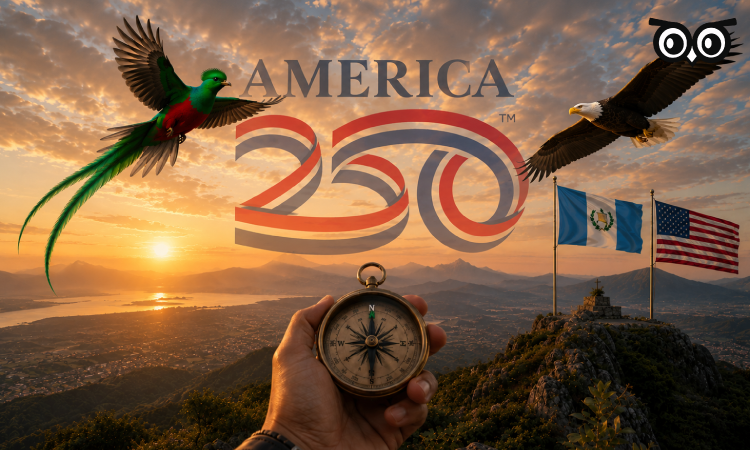
The 250th anniversary of US independence was reason for enthusiastic celebration across the United States and the whole world. Although the global populace was told by virtually all mass media outlets that respect for the United States had plummeted under Donald Trump, congratulations came from all corners of the world.
These celebratory comments were in recognition of the tremendous gifts the United States has bestowed on the world: constitutional republicanism, prosperity under freer markets and trade, and the defeat of the global collectivist, socialist movements of Nazism, fascism, and communism.
US inventions have changed the world, improving the quality of life of the common man. A concise list of a few examples suffices to make the point:
- Anesthesia made surgery painless and safer, saving countless lives.
- The telephone enabled real-time voice communication over long distances, reshaping global connectivity.
- The light bulb and electric lighting extended work and leisure hours, lit cities, and powered modern industry and urban life.
- Air-conditioning made hot climates livable year round and spurred economic growth in warm regions, boosting global productivity and quality of life.
- The airplane launched the aviation age, transforming travel and facilitating globalization.
- Assembly-line production enabled mass production of affordable goods that benefited consumers worldwide.
- The internet created the global information network that powers communication, commerce, education, and society today.
These inventions reflect the United States’ strength in turning ideas into practical, scalable technologies that continuously improve lives globally.
America 250 coincided with three key phenomena of our time: the World Cup, so-called Pride Month, and the Trump presidency.
Widely predicted to be a staggering failure under Trump, the World Cup has turned out to be a stunning example of US soft power. Social media is rife with examples of soccer tourists enjoying aspects of normal American life. That includes everything from gun ranges and monster-truck rides to massive stores and restaurant portions, Texas barbecue and, yes, air-conditioning.

Many tourists have expressed their gratitude for having been invited to eat, participate, and enjoy American culture by common everyday people. And who are these everyday people who sold the United States to the world? The MAGA folk. Foreign tourists who came to the United States for the World Cup were doubly treated to America 250. Now they want guns, barbecue, air-conditioning, and the purported excesses the common man enjoys in the United States.
One would be hard pressed to see viral videos of European and Asian tourists celebrating their first taste of tofu and vegan menus at the invitation of blue-haired, nose-pierced LGBT enthusiasts. When it comes to their own money, leftists are cheap, and they do not love America. World Cup tourists came to see fantastic soccer games, and they got that. They also got to see America-first in all its splendor. The tourists are not only enjoying it; they are reveling in it.
Against this backdrop of a world celebrating the United States on its 250th anniversary, one small neighbor stands out: Guatemala. The Guatemalan Foreign Ministry and Ministry of Defense were quick to celebrate the 4th of July on the day of America 250. Also, Guatemalan private-sector organizations, as well as the organizations that they fund, joined in the celebration of America 250: CACIF, CIG, AGEXPORT, to name a few.
It is deeply gratifying to observe the authentic cultural affinity that exists between Guatemala’s organized private sector (OPS) and the people, culture, and government of the United States. This connection is not just transactional. It stems from a shared commitment to the principles of liberty, limited government, the rule of law, and market economics that defined the US founding and continue to inspire today.
Guatemala’s OPS, coordinated through leading business chambers and associations, consistently champions policies that expand markets, innovation, and secure property rights. These are the same values that powered the United States’ rise as a beacon of prosperity and self-governance. The organizations that the Guatemalan OPS supports and funds reflect this worldview with clarity and consistency.
Let me share a few examples. Founded in the 18th century, the historic Asociación de Amigos del País (Association of Friends of the Nation) promotes culture, education, and national development rooted in dignity and liberty along the lines of US republicanism. The Center of National Economic Investigations (CIEN) delivers independent economic analysis that favors evidence-based reforms and open markets. The ASTRA Institute of Leadership and Governance advances education in public administration grounded in republican principles of governance.
In sum, the Guatemalan private sector maintains the United States as its true north. After all, the United States is Guatemala’s most important trading partner and ally in security. Yet the bond runs deeper than commerce. It is a civilizational affinity—a recognition that the American experiment in ordered liberty offers lessons and a partnership valuable to any nation seeking progress through freedom rather than coercion.

As both our countries face complex global challenges, this authentic affinity between Guatemala’s organized private sector, the organizations it sustains, and the US people, culture, and government stands as a foundation for continued mutual respect and cooperation. It deserves to be celebrated as a living commitment to principles that have proved their worth across time, thanks to the United States.
This is no small thing, not when the United States is looking for allies in its endeavor to keep China out of the Western Hemisphere. Latin American nations would do well to replicate Guatemala’s commitment to the US model of development under republican governance.


