
On December 4, 2025, the White House published its National Security Strategy (NSS). On December 22, changes of ambassadorships around the world, including Guatemala, were announced. On January 3, 2026, US forces captured Venezuelan tyrant Nicolás Maduro and brought him to stand trial on drug-related charges.
The NSS represents a blueprint that restores US strength after years of policies that subjugated clear American interests to the interests of the liberal world order. The NSS prioritizes economic dominance, military superiority, and pragmatic deal-making to achieve “peace through strength.” A key pillar is identifying and countering China as the top threat to US interests.
Regarding the Western Hemisphere, the NSS asserts US preeminence to counter foreign meddling and combat cartels and socialism. In contrast to the Barack Obama administration, which declared “the era of the Monroe Doctrine is over,” the NSS declares that US dominance in this hemisphere will not be questioned. The White House has bluntly explained the Trump Corollary, a modern revival of the Monroe Doctrine:
“We will deny non-Hemispheric competitors the ability to position forces or other threatening capabilities, or to own or control strategically vital assets, in our Hemisphere.”
The changes and implications of the NSS for global and regional affairs could not be more significant.
If Trump had been president in 1959, the Fidel Castro regime would have died in its infancy. If Trump had been president in 1977, the Panama Canal would still be US territory. Conversely, if Trump had not been president in 2025, the current Marxist-leaning government of Honduras would not have agreed to cede power to the conservative Trump-backed President-elect Nasry Asfura.
The Trump administration will have hard work to do to lessen China’s influence in the region. China has already displaced the United States as the main trading partner for the countries of South America.
Central America will be the new battleground, but challenges remain.
On the same day the capture of Maduro was announced, the Central American Parliament (PARLACEN) immediately called for his release. PARLACEN’s hostility towards Trump reflects China’s influence in Central America. In 2023, PARLACEN approved China’s ascension to permanent observer status shortly after passing a motion to exclude Taiwan. As a result, Taiwan withdrew as an extra-regional permanent observer.
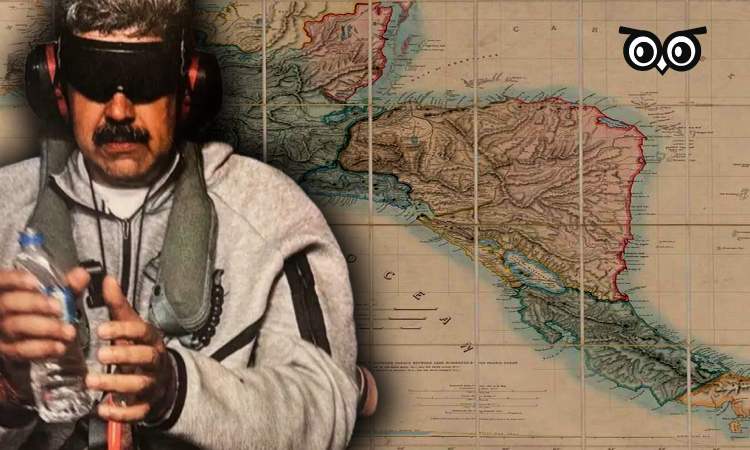
In Nicaragua, the socialist Daniel Ortega regime invited China to build an interoceanic canal to rival the Panama Canal. Although the canal project failed in 2024, it showed China’s determination to extend close to US shores its Belt and Road Initiative. This involves financing infrastructure projects to promote Chinese influence. Moreover, in March 2023, the outgoing government in Honduras of socialist Xiomara Castro terminated formal diplomatic relations with Taiwan and established formal relations with Communist China.
Looking forward, Guatemala—the largest country in Central America, in terms of population and GDP—will prove important for US interests. Guatemala still recognizes Taiwan and has been an ally of Israel in the region.
With Trump-aligned governments in El Salvador and Honduras, the United States needs Guatemala to establish an interoceanic bulwark. It can stand against the transnational drug trade emanating from South America, illegal migration flows and human trafficking, and the rising presence of China in the Central American Isthmus.
More to the point, Guatemala holds important elections this year, for its Supreme Electoral Tribunal (TSE), the Constitutional Court (CC), and attorney general (AG).
The TSE will oversee the 2027 presidential, legislative, and municipal elections. The CC’s composition influences judicial independence and the balance of power. The AG leads the Public Ministry (MP), responsible for criminal prosecutions, anti-corruption investigations, and enforcement of public law. This office plays a central role regarding corruption, organized crime, and drug trafficking.
These are all institutions socialists took over in Venezuela to consolidate power and perpetuate a tyrannical regime.
Guatemala is no stranger to lawfare, most notably under the failed CICIG experiment. Formally a UN operation to fight corruption, the CICIG drew its power from its backing by the Obama administration, whose lawfare operations against Trump’s candidacy and government are infamous. Under the leadership of Iván Velásquez, the CICIG notoriously opted to pursue private-sector leaders for relatively minor campaign finance violations, instead of the narco leaders who presented the real threat. The Guatemalan private sector sounded the alarm regarding that rising threat of narco-power in its report “Drugs, Guns and Cash,” published many years ago.
Once CICIG was terminated under the first Trump administration, Velásquez went on to become the defense minister under the socialist president of Colombia. Gustavo Petro quickly became engulfed in a much more serious narco-cash scandal, a matter on which Velásquez has been largely silent. More concretely, the appointment of a prosecutor as defense minister is part and parcel of the socialist playbook of appointing political operatives to technical posts, to lay wrath to the institutional structure that a functioning republic needs.
Lawfare is the tool that leftists use to control political outcomes. Trump himself referenced the lawfare against him when explaining his pardon of the former president of Honduras, Juan Orlando Hernández: “He was treated like the Biden administration treated a man named Trump.”
The Trump administration should be aware of the importance of the elections of the electoral, constitutional, and prosecutorial authorities in Guatemala this year. Otherwise, the experiences of Venezuela may be repeated, even closer to US shores.

