
In the year 1900, there were fewer than 80 nations on the planet; now there are close to 200. This decentralization and jurisdictional tailoring is healthy, and it would best continue.
One of those young nations is Panama, which became independent in 1903. While the idea of secession from Colombia might have seemed radical, the proof is in the pudding. You will struggle to find a Panamanian anywhere who advocates reannexation, and Panama’s distinct identity is clear.
Panama performs among the best in Latin America for many metrics. According to the Fraser Institute’s “Economic Freedom of the World Report,” Panama ranks 27th, only slightly behind Chile in 26th, while Colombia ranks 94th. Further, Panama’s GDP per capita is twice that of Colombia.
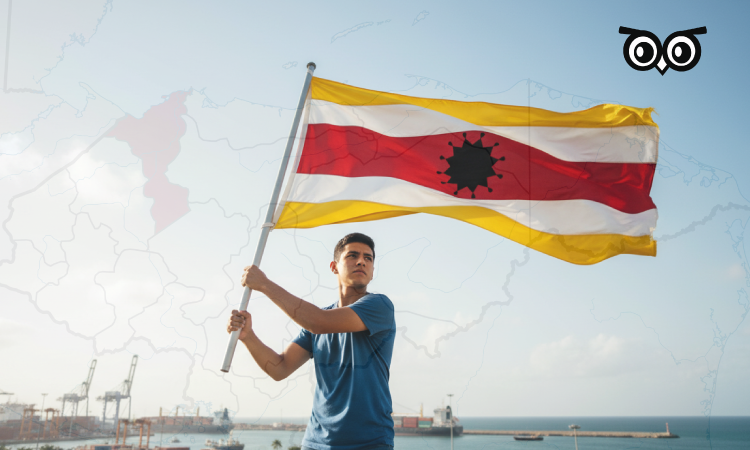
Although in its gestational stage, the idea of independence for Cortés from Honduras offers similar promise. San Pedro Sula Mayor Roberto Contreras is not the first, but he recently floated the idea. He is the focus of investigations, and the tension between San Pedro Sula and Tegucigalpa is rising. He is probably suffering from selective prosecution, AKA lawfare.
The likely path forward would include the Bay Islands in the new nation for a population of about 2 million. Roatán and the other islands share a closer relationship with San Pedro Sula than with Tegucigalpa, and they would almost certainly prefer the new nation to the status quo.
Opinion polls for this month’s presidential race are all over the map and leave one struggling to predict a winner. However, if the Libre party remains in power, its leaders will further alienate provinces such as Cortés that reject Nicaragua-style rule.

Here are five reasons that back the case for a Republic of Cortés:
- Cortés and Roatán are ethnically distinct from the Spanish-mestizo south. The Caribbean coast, much like English-speaking Belize, has a noticeable Afro-Caribbean and British history. English remains the most spoken language in Roatán, in defiance of Spanish’s official status. Further, San Pedro Sula, Cortés’s capital, has attracted many entrepreneurial migrants, making it a more diverse and trade-oriented city. Those of Arab descent number in the hundreds of thousands in Cortés and are known locally as turcos.
- San Pedro Sula is an industrial hub that can stand on its own feet. Tegucigalpa takes and squanders while San Pedro Sula pays the lion’s share of taxes. As author Daniel Cruz explained on X, “those in Tegucigalpa who would laugh at this idea and discard [secession] as nonsense would be doing it at their own risk.… sampedranos are done with funding corrupt, ineffective governments.”
- The new nation could swiftly dollarize, ideally towards full monetary optionality. The absence of a central bank in Panama has been one of the chief ingredients of the young nation’s success. While the dollar in the United States has experienced about 500 percent inflation since 1975, the Honduran lempira has had almost 8,000 percent inflation during the same period and greater volatility.
- Puerto Cortés is the most influential port in Central America and only about 40 miles (60 kilometers) from San Pedro Sula. The promise of a booming trade and manufacturing hub is there for the taking. The impediment remains geopolitical risk, stemming from a dominant capital city lacking accountability and a failed drug war.
- The new republic could succeed where ZEDEs have failed. While the semiautonomous regions were a captivating idea—bringing in competitive governance and foreign investment—they did not achieve widespread support and lost their legal status. A free Cortés could scale the idea and match it with a sense of local pride and sovereignty.
The idea is sound, even if the mechanics of getting from A to B remain to be fleshed out. The name could also change to the San Pedro Sula Republic, since locals already call themselves sampedranos. Tegucigalpa is on the verge of becoming a focal point for neofeudalism. On the other hand, an independent Cortés would be a focal point for development where it is sorely needed. Cortés also merits US backing to counteract the Chinese Communist Party’s corrupting influence.

